IDAHO — A change in Idaho’s school funding formula has left many districts grappling with budget shortfalls, as schools now receive funding based on average daily attendance rather than total enrollment.
The shift, which reverted to pre-pandemic funding rules, has exacerbated financial pressures on districts already strained by absenteeism driven by flu, COVID-19, and other illnesses.
During the pandemic, Idaho funded public schools based on enrollment, a method that superintendents from the Lakeland and Post Falls school districts say better met the needs of their students. However, the state has returned to funding schools based on average daily attendance (ADA).
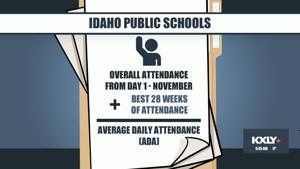
The ADA calculation combines attendance figures from the first day of school through the first Friday of November and the best 28 weeks of attendance for the school year.
Post Falls Superintendent Dena Naccarato says the return to attendance-based funding creates significant challenges for her district.
“Our funding formula has built into it basically an inability to provide a uniform and thorough public education, like the constitution says we’re supposed to have here in Idaho,” Naccarato said.
Just a few miles away, Lakeland School District is facing similar struggles. Superintendent Lisa Arnold said attendance-based funding has left her district with tighter budgets and mounting concerns.
“It does cause me a lot of sleepless nights to think about what it looks like moving forward,” Arnold said.
Lakeland prides itself on small, community-focused schools, which Arnold says provide personal connections for students. However, shrinking budgets could force class sizes to grow from 25 students to as many as 30 or 40 unless additional funding is secured.
To address these challenges, both districts are asking voters for support in upcoming elections. Lakeland School District will seek approval for a $7.5 million levy in May, following the failure of a $9.5 million levy last November.
Meanwhile, Post Falls voters will decide whether to renew a levy providing nearly $6 million per year, which is up for renewal every two years.
Both Arnold and Naccarato hope taxpayers will recognize the importance of these measures in maintaining quality education and preventing cuts to critical programs and services.
COPYRIGHT 2025 BY KXLY. ALL RIGHTS RESERVED. THIS MATERIAL MAY NOT BE PUBLISHED, BROADCAST, REWRITTEN OR REDISTRIBUTED.
