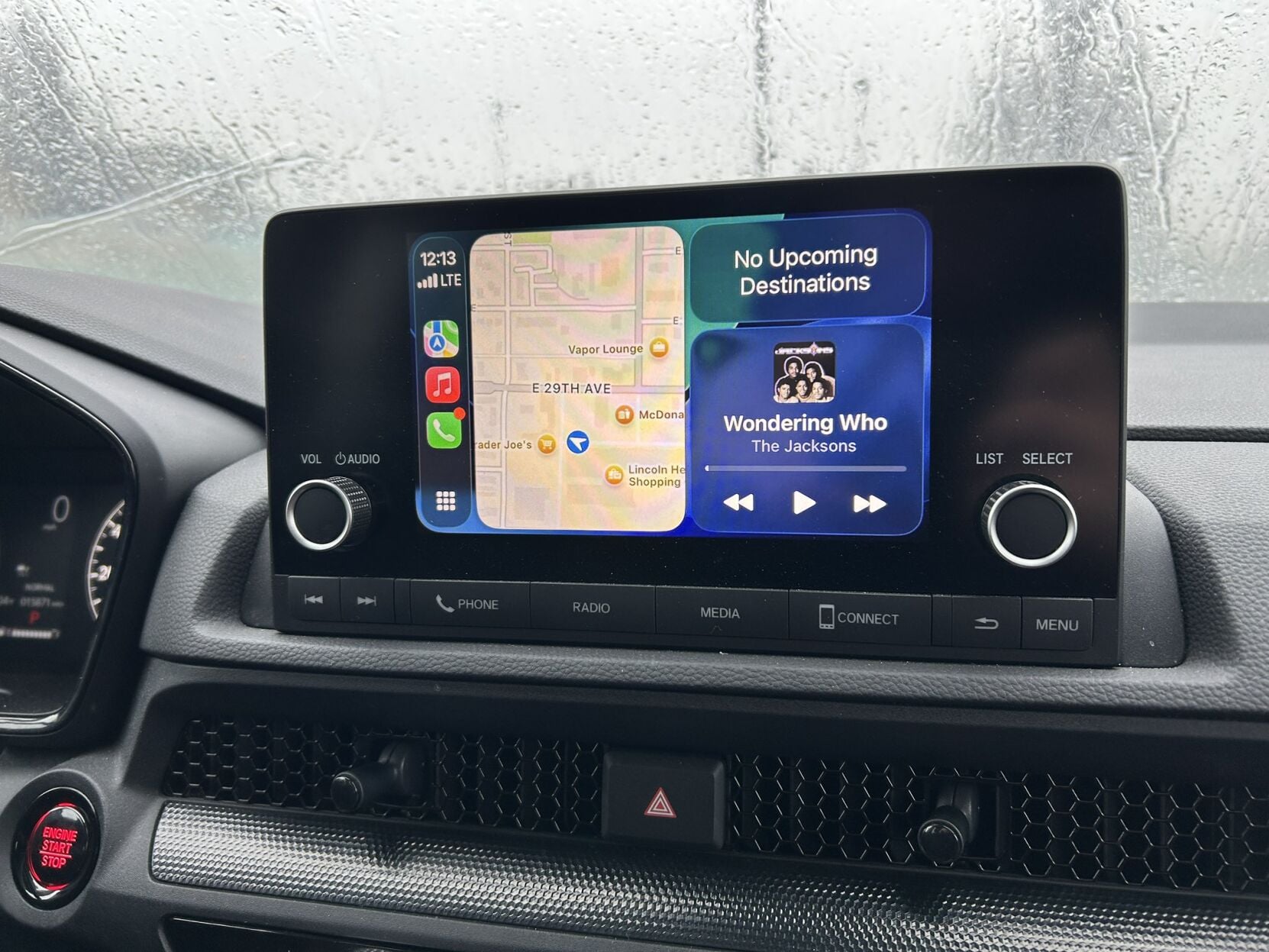
SPOKANE, Wash. — Touchscreens are becoming more common on products we use every day, especially newer cars. But a new study finds those screens can impact your ability to focus on the road.
The study from the University of Washington shows people have a tough time multitasking when there’s a touchscreen in the car. Drivers notice the screens are only getting larger in newer cars.
Many newer cars on the road rely heavily on technology to control almost everything, usually in the form of a touchscreen. The University of Washington recently published a study on how those screens affect your ability to drive.
The study found when people try to drive and use a touchscreen, they’re worse at both. It also causes drivers to veer out of their lane.
Drivers with touchscreens say it took time to adjust to the technology.
“I had to frequently pull over to the side of the road if I needed to find something because I felt like it was a little dangerous if I was trying to navigate the menu while I was driving,” said Nicole Loveall, a driver.
Distracted driving is close to becoming the number one cause of deadly crashes. One local driving school says it’s not surprised touchscreens are contributing to that issue.
“I only use like 10% of it, but I could see trying to get used to it while you’re driving, that would not be good. That would take a lot of your cognitive out of the equation,” said AJ Seitz, owner of 911 Driving School.
Seitz owns 911 Driving School and says his school teaches kids not to rely on technology when driving.
However, driving schools note these screens can be helpful when answering calls and texts without having to pick up your phone, so they can at least eliminate those kinds of distractions.
“In that way, it’s a good thing because with text messaging, it takes the cognitive out of it, the vision out of it, and the hand control out of it by using the newer controls on the cars,” Seitz said.
Using a touchscreen that’s built into your car is not against the law in Washington or Idaho.
COPYRIGHT 2025 BY KXLY. ALL RIGHTS RESERVED. THIS MATERIAL MAY NOT BE PUBLISHED, BROADCAST, REWRITTEN OR REDISTRIBUTED.