OLYMPIA, Wash. – As lawmakers continue debate on how to close the state’s multi-billion-dollar budget shortfall, questions are coming up about how services for the homeless could be affected.
“It was tough coming into this budget, it’s gonna be tough coming out of it,” said Tedd Kelleher with the housing division of the Washington State Department of Commerce.
Kelleher said Commerce is facing tough cuts to some of their programs around homelessness. The department is facing administrative cuts and reductions to smaller programs that serve people with high needs. While some programs are receiving the same amount of money, he acknowledged inflation means the funds will not go as far as they have in the past.
However, Kelleher said the department is thankful as they are not seeing proposals for “dramatic reductions,” considering the size of the state’s projected deficit. The department is seeing “quite favorable” proposals, he said, due in part to the importance of housing.
“It’s a priority for everyone across the board, all the houses, all the branches of government, et cetera. So the budgets reflect that,” he said.
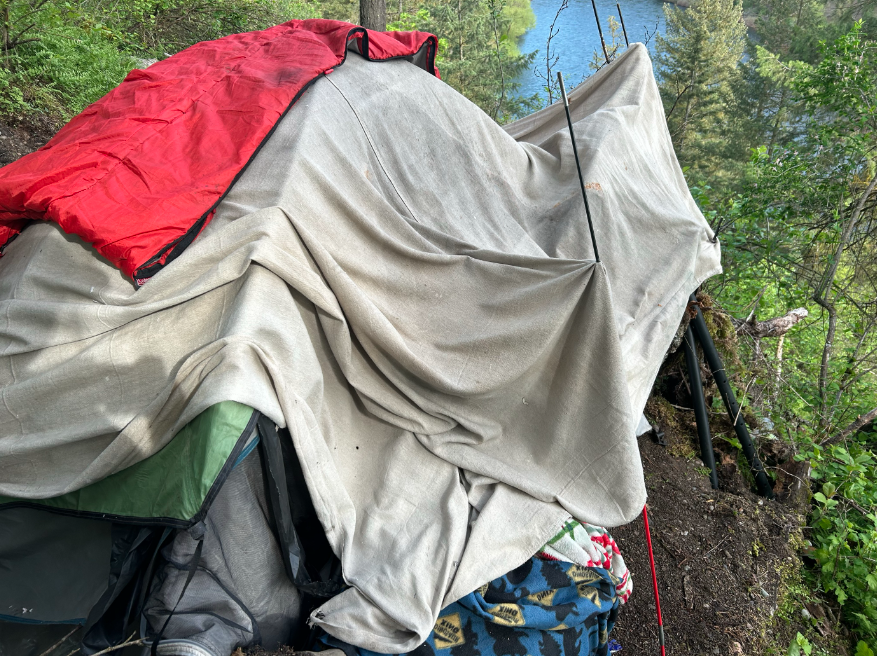
One of the initiatives facing a proposed reduction is the Encampment Resolution Program, in which Commerce works with the Department of Transportation and local governments to move people from camps near highways and other public areas and into housing.
Kelleher said the department had gotten $70 million a year for the program in the last biennium, but that will be reduced to the carryforward level of $45 million each year over the next two years.
While they will not have to shutter any housing options, Commerce will be limited on how many people they can get off the streets in the future as beds funded by the program have a low turnover rate.
“We haven’t set up a system where we’re gonna have to close things down. But it is definitely going to bring the program back to its foundational level,” Kelleher said. “We’ve closed quite a few encampments, but that pace is gonna drop quite a bit. We addressed 57 sites, but I expect just a handful at the $45 million a year.”
In Spokane, city leaders said the highway encampment program has been critical, helping them clear four encampments in public spaces since last summer. Through that work, 101 people were offered help with 80 getting housing and other services.
Dawn Kinder, Director of the city’s Neighborhood, Housing, and Human Services division, said the work made the areas accessible to the public again and got people who lived there connected to resources to get on their feet. However, cuts to housing provided by the program would threaten the work moving forward.
“There’s so many points that funding is critical,” she said. “It might not sound like a lot to lose funding in one place. But that one place can backlog the other three steps of the journey, making it more and more difficult to successfully exit people and to be responsive to camps.”
The Seattle/King County Coalition on Homelessness believes the freeway encampment program has been very successful, but that and all other homelessness programs need more support.
Executive Director Alison Eisinger argued that maintaining funding levels ultimately amounts to a funding cut due to inflation, and new revenue is needed to expand crucial support programs.
“When it comes to homelessness and housing, everyone in Washington understands that we need more than we currently have,” she said. “Maintaining existing services, while essential, is not enough to take care of our fellow Washingtonians.”
The House and the Senate have to agree on one budget to send to the governor by the time session ends on April 27.
Albert James is a television reporter covering state government as part of the Murrow News Fellowship program – a collaborative effort between news outlets statewide and Washington State University.
COPYRIGHT 2025 BY KXLY. ALL RIGHTS RESERVED. THIS MATERIAL MAY NOT BE PUBLISHED, BROADCAST, REWRITTEN OR REDISTRIBUTED.
