SPOKANE, Wash. — Only five weeks remain in the 2025 legislative session before a final budget for the state of Washington must be passed.
The state is dealing with a multi-billion-dollar budget deficit. Some say part of the answer could involve a pay cuts for local workers.
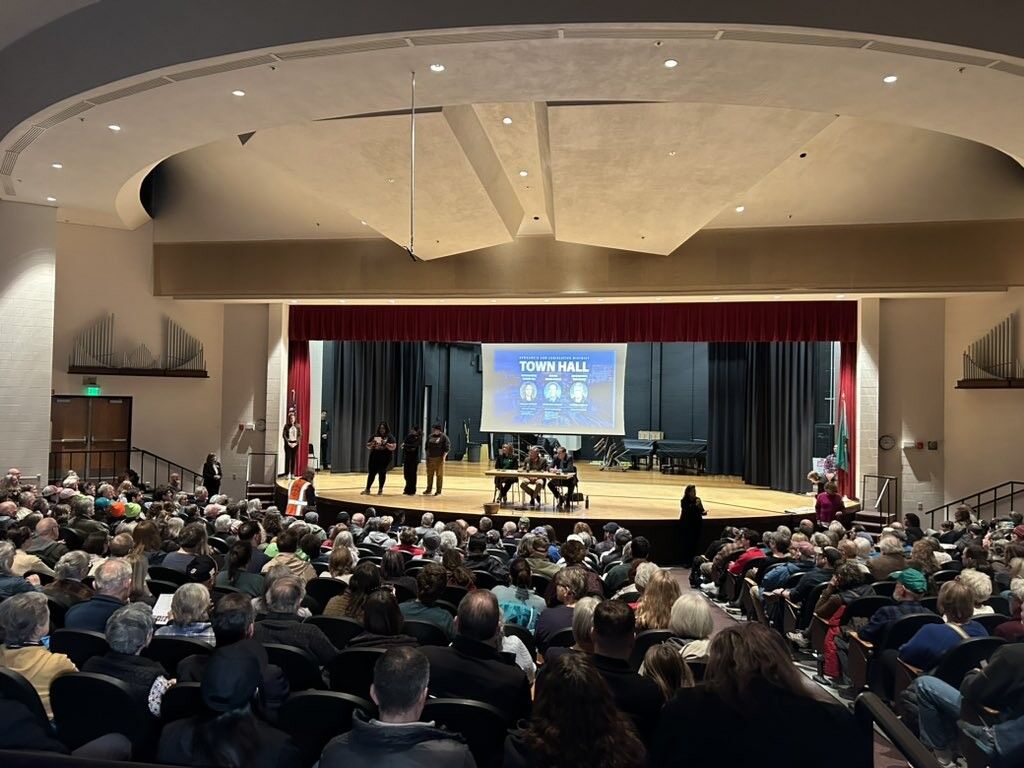
On Saturday, 3rd District legislators held a town hall meeting in Spokane to address this hurdle.
The crowd in the town hall was passionate about many issues, especially on the impact the looming budget cuts could have on their personal lives.
“We are expecting a strong plan that does not put working families last,” one attendee said, after asking the 3rd district legislators to fight against Governor Bob Ferguson furlough proposal.
The governor’s plan suggests furloughing certain state workers for one day each month, essentially expecting them to take unpaid time off.
“It is really a slap in the face to be completely honest,” said Julie Peters, a state worker at Eastern State Hospital and member of the Washington Federation of State Employees.
Peters attended Saturday’s meeting hopeful to collect support against these furloughs.
“It is messy, it didn’t work very well in 2011,” said Rep. Timm Ormsby who criticized the governor’s proposal.
State Rep. Ormsby emphasized that balancing the budget was his top priority.
But the cuts to state programs weren’t the only concern for Eastern Washington residents. A proposal from house Republicans to cut billions from Medicaid also sparked conversation during the town hall.
“I have 75 Medicaid people in my building,” one attendee said. “Where will they go? We need this funding.”
While Medicaid funding is a federal issue, State Sen. Marcus Riccelli warned of the local impact this could have.
“We’re going to do our best to protect what we have,” Riccelli said. “It’s going to happen right now… and it’s going to be extremely challenging.”
Gov. Ferguson’s furlough proposal would trim $300 million from the state budget as part of a larger plan to save Washington $4 billion.
But state worker Graeme Lauer says that would but around 5% of state workers earnings, which is why he’s urging government officials to explore other options.
“The money has to come from somewhere or be taken from somewhere,” Lauer said. “We just don’t see this making any sense. There’s plenty of wealth in our state.”
COPYRIGHT 2025 BY KXLY. ALL RIGHTS RESERVED. THIS MATERIAL MAY NOT BE PUBLISHED, BROADCAST, REWRITTEN OR REDISTRIBUTED.
