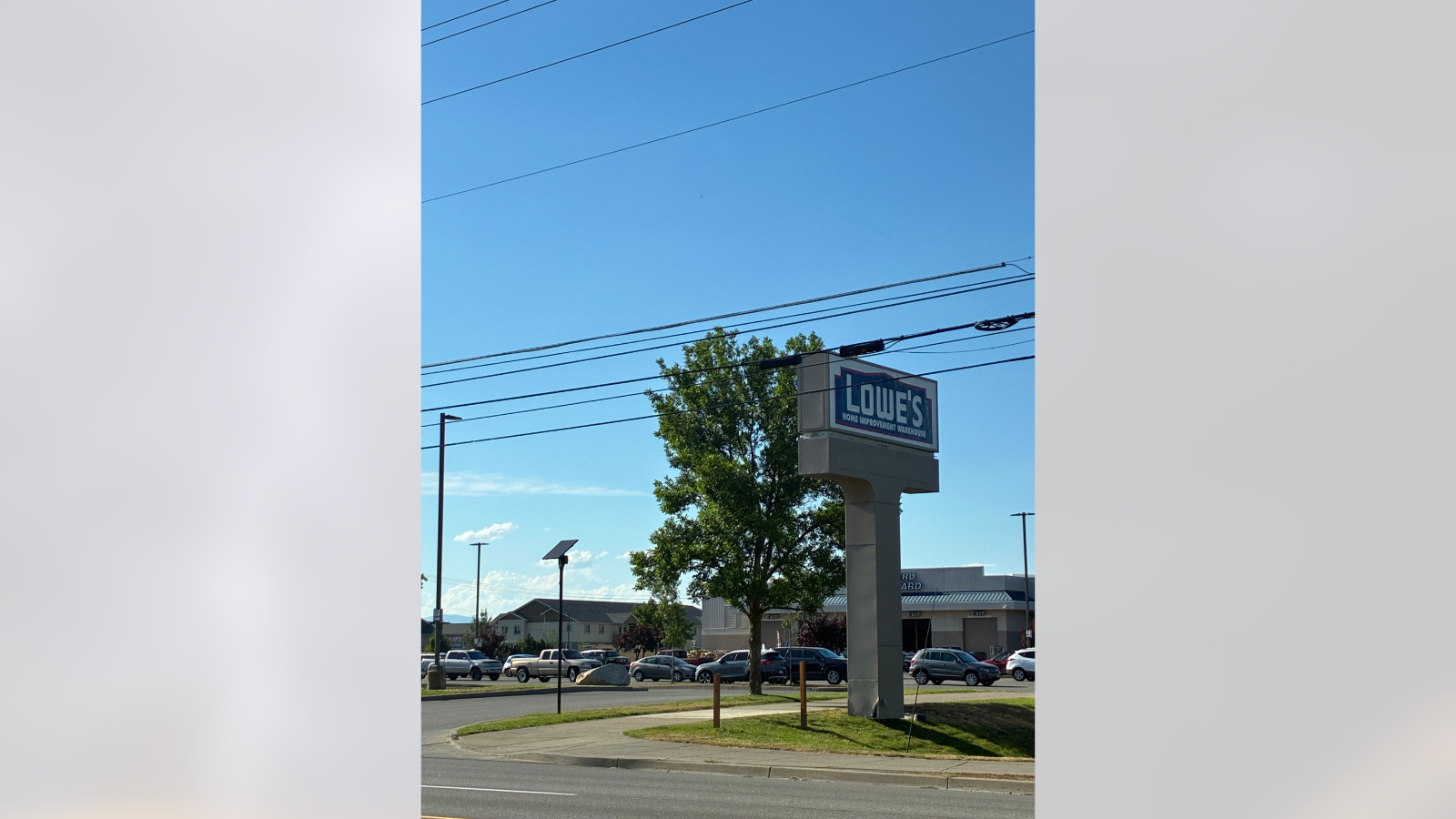
COEUR D’ALENE, Idaho — Cameras in a Lowe’s parking lot are once again fueling a broader conversation about where communities should draw the line between public safety and personal privacy.
Flock Safety cameras have been installed at the entrances and exits of the Coeur d’Alene Lowe’s, where they capture vehicle information to help identify suspects and solve crimes. The technology has drawn renewed scrutiny as concerns grow about who accesses the data being collected and how it is used.
According to Flock Safety, the cameras are AI-powered automated license plate readers designed to help law enforcement and private communities identify vehicle details. Lowe’s has said it placed these cameras in some locations around the country to deter theft and other crime.
However, anti-Flock groups paint a different picture of the technology’s capabilities. Deflock Idaho, a local advocacy group, argues the cameras are harmful and collect far more information than necessary. The cameras capture a vehicle “fingerprint” that includes the make and model of the car as well as identifying traits like roof racks or bumper stickers, according to the group.
“The data the cameras are collecting is being uploaded to databases that police and some federal agencies have access to,” said a Deflock Idaho representative.
The concern centers on the scope of data collection and the lack of transparency around access. Residents and privacy advocates question whether the information gathered justifies the surveillance infrastructure being installed throughout communities.
Tyler Cain, a Deflock Idaho representative, expressed frustration with the trade-off between privacy and safety. “Every time I leave my house I have to pass a camera to go out of town,” Cain said. “To say that I need to trade my privacy for people’s safety is a preposterous ask.”
Deflock Idaho’s next step is to educate the public on how to protect their privacy. Cain made clear the group’s ultimate goal: removing the technology from Idaho entirely.
“I won’t stop until the company Flock is out of this state,” Cain said. “I think they’re a terrible company and this technology is not only not useful, it’s very unneeded.”
Not all residents share that concern. Brad Mitchell, who lives directly across the street from one of the Flock cameras at Lowe’s, sees the technology differently.
“Personally I think it gives law enforcement an edge,” Mitchell said. “I don’t think it’s an invasion of privacy if you’re doing wrong, you know, then you better know they’re there. So for the average person, no. Why would it be a threat?”
The Coeur d’Alene Police Department did not immediately respond to requests about whether they or other agencies can access the cameras or receive data from them. Lowe’s also has not yet responded to similar inquiries.
As communities across Idaho continue searching for a balance between public safety and personal privacy, the debate over Flock cameras shows no signs of slowing down. The technology represents a broader challenge facing local governments and businesses: how to leverage surveillance tools for crime prevention while respecting residents’ expectations of privacy in public spaces.
The outcome of this debate could influence how other communities in the region approach similar surveillance technology in the coming months.
COPYRIGHT 2026 BY KXLY. ALL RIGHTS RESERVED. THIS MATERIAL MAY NOT BE PUBLISHED, BROADCAST, REWRITTEN OR REDISTRIBUTED.