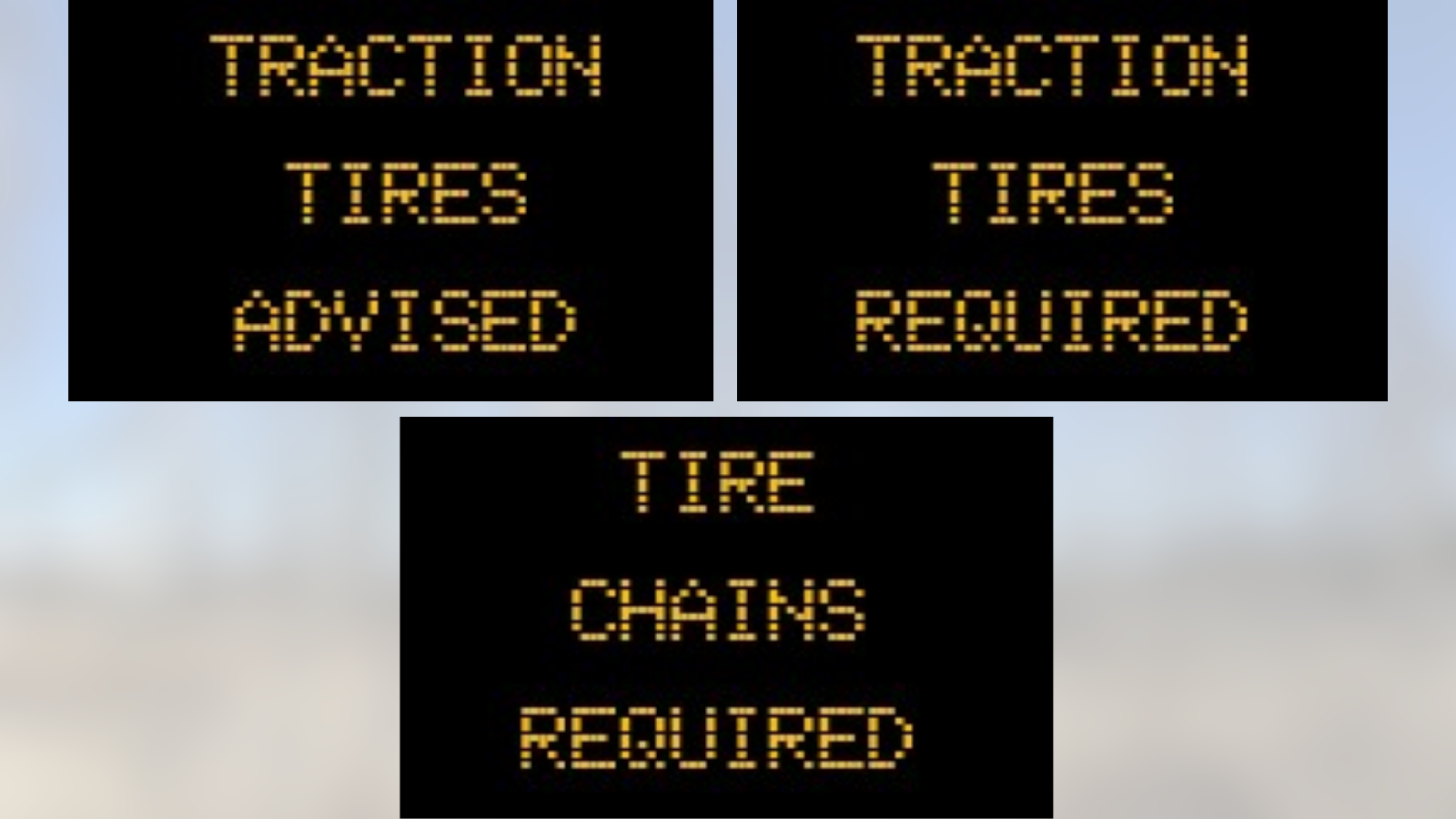
WASHINGTON – If you are planning to travel in the state of Washington during the winter months, it is crucial to understand and comply with the state’s tire and chain laws.
Weather conditions can change rapidly in higher elevations, leading to hazardous roads covered with snow and ice.
Washington enforces strict regulations to ensure your safety and the safety of others on the road.
This guide explains the legal requirements for studded tires, traction tires, chains, and approved chain alternatives to help you prepare properly for winter travel across Washington’s mountain passes.
Studded tires
Studded tires are legal in Washington only from Nov. 1 through March 31. Drivers who use studded tires outside that period may be fined.
There are no individual exceptions to the studded tire season. Drivers traveling in Washington must follow state motor vehicle laws, even if they are visiting from a state with different regulations.
Studded tires do not meet chain requirements.
Studded tires and chain requirements
Studded tires do not satisfy Washington’s chain requirements. When chains are required:
Drivers of front-wheel-drive and rear-wheel-drive passenger vehicles must install chains over studded tires.Drivers of four-wheel-drive and all-wheel-drive vehicles are not required to install chains when signs read “Chains Required,” but they must carry chains in the vehicleChains may be required on four-wheel or all-wheel drive vehicles if conditions worsen and signage changes to “Chains Required on All Vehicles.”
Traction tires advised
When a road is posted “Traction Tires Advised”:
Passenger vehicles (including all-wheel and four-wheel drive):Traction tires are suggested but not required.Large vehicles (trucks, delivery vehicles, semi-trucks):Traction tires are required. If the vehicle doesn’t have them, drivers must put on chains or an approved alternative. Chains or an approved alternative must be kept in the vehicle in case conditions get worse.Oversize loads:Oversize loads are not allowed on these roads. Normally, these loads need special permits, but no permits are issued when traction tire or chain advisories are in effect.
Traction tires required
When “Traction Tires Required” is posted:
Passenger vehicles under 10,000 pounds:Traction tires are required. If your vehicle doesn’t have traction tires, you must put on chains or use an approved chain alternative.Vehicles over 10,000 pounds:Chains or an approved chain alternative are required. This includes some large trucks and SUVs, depending on their weight.
Chains required on all vehicles
When “Chains Required on All Vehicles” is posted:
All vehicles, including four-wheel and all-wheel drive:You must use chains or an approved chain alternative. This is usually the last step before a mountain pass is closed. If every vehicle chains up, it can help keep the road open.
Alternatives to studded tires
Drivers are encouraged to consult a tire dealer about stud-free winter traction tires, which are legal year-round and cause less roadway damage than studded tires. These tires are different from all-season tires and have more aggressive tread designed for winter conditions.
In Washington, failure to use required chains (or approved alternatives) is a serious traffic infraction with a $500 fine, and it significantly increases liability because the driver was not following the law, even if the accident wasn’t directly caused by lack of traction.
For more information visit the Washington State Department of Transportation website.
COPYRIGHT 2025 BY KXLY. ALL RIGHTS RESERVED. THIS MATERIAL MAY NOT BE PUBLISHED, BROADCAST, REWRITTEN OR REDISTRIBUTED.
