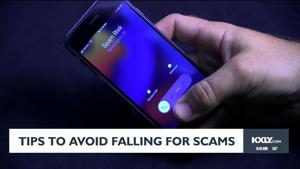
Criminals have found a new way to exploit consumers’ financial security measures by sending fake fraud alert messages designed to steal banking information.
Aaron Robel, vice president of information security and fraud at WSECU, said scammers are now masquerading as legitimate fraud protection services to trick people into revealing sensitive financial data.
“They will masquerade as, unfortunately a fraud alert on your account. And then they provide the link, that they want you to click on, in the alert, and that takes you to a fake website where they mine information off of you so they can turn around and log in to your account and start you know, sending money out the door,” Robel said.
The sophisticated schemes represent an evolution in financial fraud, with criminals exploiting the very security measures designed to protect consumers. These fake alerts often include links that direct victims to fraudulent websites that harvest login credentials and personal information.
Robel said his organization encounters new variations of these scams daily, with fraudsters constantly adapting their tactics. The schemes can appear through multiple channels including emails, phone calls, social media messages and text alerts.
“I mean, ultimately, the scammers are really looking for how they get access to your account to drain your money out,” Robel said.
Technology advancements have made these scams more convincing and dangerous. Criminals now use artificial intelligence and voice replication technology to impersonate trusted entities, including law enforcement agencies using legitimate phone numbers.
The sophistication of these schemes means that even technology-savvy individuals can fall victim, according to Robel. The key vulnerability is not lack of technical knowledge, but rather the failure to pause and think critically when receiving unexpected communications.
“Even technologically sophisticated people, because they don’t slow down. They don’t take that critical thinking step to say, okay, wait, wait a minute. Is this really real or is this something weird going on?” Robel said.
Security experts recommend three primary strategies for avoiding these scams.
First, consumers should resist the pressure to act quickly when receiving unexpected communications about their accounts. Scammers deliberately create urgency to prevent victims from thinking clearly about the situation.
“Scammers want they want to act fast. They want to elicit that, behavioral response, whether it’s really good because they want to say that you want something or really bad, as in, you owe money for something that you did. So slowing down is the number one thing,” Robel said.
Second, people should independently verify any suspicious communications by contacting their financial institution directly through official channels rather than using contact information provided in the suspicious message.
“Place the call or go to the website. You know, those kinds of those things right there will significantly reduce the risk of getting scammed,” Robel said.
Third, consumers should maximize their account security by enabling all available fraud protection alerts and regularly monitoring their credit reports for unusual activity.
“Go in and turn on all those security alerts so that they’re getting some of it can be noise, but getting some of that great Intel so they can take action when they need to and call the financial institution before something bad happens,” Robel said.
The irony of the latest scam trend is that it exploits the very fraud protection measures that financial institutions have implemented to keep customers safe. However, Robel emphasized that consumers should not abandon these security features but rather remain vigilant about how they respond to alerts.
Anyone who believes they have received a fraudulent communication should contact their financial institution immediately through official channels to report the incident and verify the legitimacy of any account alerts.
COPYRIGHT 2025 BY KXLY. ALL RIGHTS RESERVED. THIS MATERIAL MAY NOT BE PUBLISHED, BROADCAST, REWRITTEN OR REDISTRIBUTED.