BOISE, Idaho – New rulings issued in the case against suspected killer Bryan Kohberger show how the case against him this summer could take shape.
Kohberger is accused of killing four University of Idaho students in November 2022. He faces the death penalty if convicted.
Kaylee Goncalves, Xana Kernodle, Madison Mogen and Ethan Chapin were stabbed to death in an off-campus home. Prosecutors have revealed no connection between the victims and Kohberger, who was a graduate student studying criminology at nearby Washington State University.
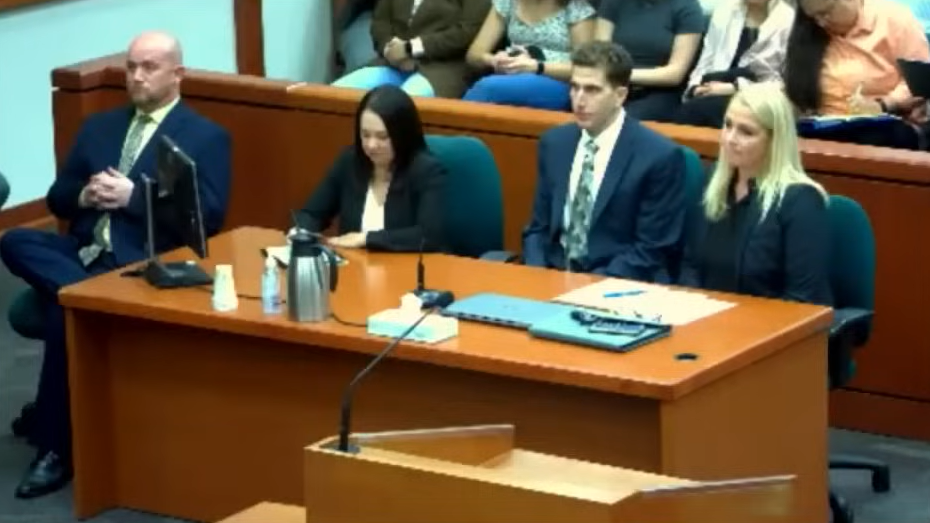
At a hearing last week, attorneys for each side argued several motions about what might be admissible at the trial, scheduled to take place this summer in Boise.
‘Bushy Eyebrows’
Among the considerations, would prosecutors be allowed to introduce evidence of one of the surviving roommates described the killer as having “bushy eyebrows.”
One roommate who saw a masked man leaving the home around the time of the murders saw only his eyes and described him as having “bushy eyebrows.”
The defense argued that her description was unreliable and therefore should not be allowed.
Prosecutors say it’s based on her personal knowledge and is relevant to the case.
In weighing the evidence, Ada County Judge Steven Hippler described the roommate as “a direct witness in the case” and that her description of the intruder was “remarkably consistent through all five interviews and her grand jury testimony.”
Judge Hippler said there’s no factual basis for excluding her testimony, saying that “[Her] testimony about ‘bushy eyebrows’ is highly relevant in this case.'”
Prosecutors wanted to prohibit the defense from introducing evidence during the penalty phase of the trial that was part of neurological and psychiatric evaluations done on Kohberger.
That’s because the state believes what would be introduced – evidence about Kohberger having Autism and other disorders – falls outside the law of what Idaho allows in relation to a defendant’s mental condition.
The defense argued that the diagnoses are physical, not mental and are meant to explain what some could perceive as “unconventional courtroom demeanor.”
Judge Hippler said that if Kohberger does not testify, evidence of his diagnoses are not relevant and/or inadmissible.
If the defense wants to challenge that her description, Judge Hippler said, it should be done when the defense cross-examines the witness.
DNA Debate
Judge Hippler also had to decide whether to grant the defense motion regarding the DNA found on the knife sheath left at the crime scene.
Prosecutors say that DNA matched Bryan Kohberger.
The defense took issue with the testimony from the woman who manages the Idaho State Forensic Services Laboratory.
She will be called to testify using the terms “touch” or “contact DNA in relation to how the DNA ended up on the sheath.
The defense argued that the witness couldn’t know for sure how the DNA ended up on the knife sheath and therefor, her testimony should not be allowed.
The judge ruled that her testimony is allowed, but told attorneys to instruct witnesses to avoid using the terms touch DNA, contact DNA and trace DNA.
The White Elantra
In the days and weeks after the murders, police revealed very little about how they were tracking down a suspect.
The only piece of evidence they revealed is that they believed the killer left the scene in a white Hyundai Elantra.
Kohberger owned a car of that make and model.
The defense argued that it wasn’t clear in the video that white sedan seen at the crime scene was an Elantra and asked that information to be kept from the jury.
The state says it plans to provide expert testimony to show that the vehicle at the scene and Kohberger’s vehicle are the same make and model.
The judge sided with the prosecutor, saying they can introduce expert testimony in an effort to prove that.
Kohberger’s family
The judge also considered a defense request to allow Kohberger’s family to remain in the courtroom through the duration of the trial.
Prosecutors argued against it, saying Kohberger’s family members could be called as witnesses.
The judge said Kohberger has a right to have his family support him during what will be a lengthy and emotional trial.
He ordered the state to provide a list of family members that could be witnesses and include specifics as to why they should be excluded from the courtroom.
That list is due to the court next week.
The trial is scheduled to begin with jury selection August 11th in Boise.
COPYRIGHT 2025 BY KXLY. ALL RIGHTS RESERVED. THIS MATERIAL MAY NOT BE PUBLISHED, BROADCAST, REWRITTEN OR REDISTRIBUTED.
